1. EU Deforestation Regulation (EUDR)
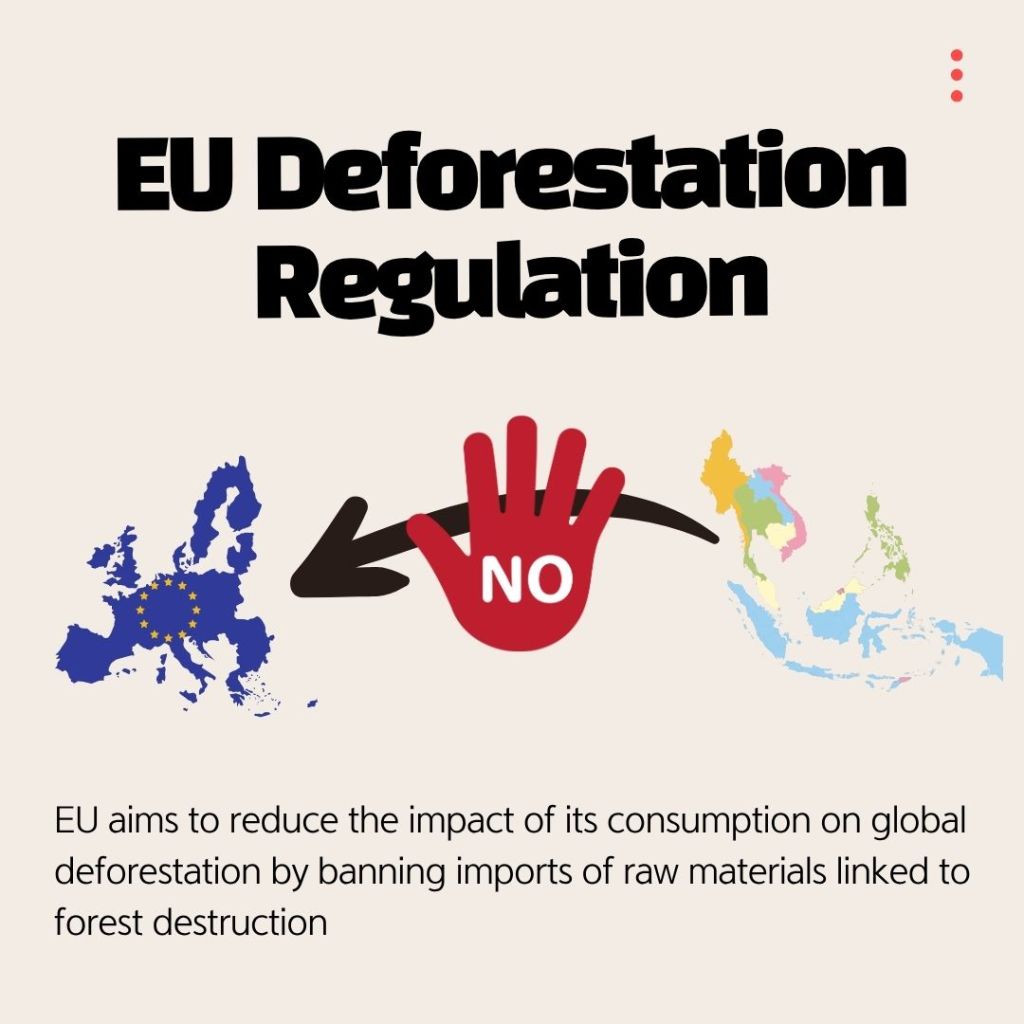
- Key Raw Materials:
Palm oil, beef, rubber, timber, cocoa, coffee, soybeans - Products Manufactured:
Chocolate, furniture, tires, leather, clothing, etc. - Obligations for Companies:
- Proof of Sustainability: Companies must prove that the raw materials do not originate from forests cleared after December 31, 2020.
- Geographical Coordinates: Companies must submit the geographical coordinates of the land where the raw materials were produced.
- Compliance with Legal Requirements: Companies must comply with the environmental and legal regulations of the producing countries.
- Risk Assessment and Mitigation:
Companies are required to assess the environmental risks in their supply chains and take necessary mitigation measures.
- Proof of Sustainability: Companies must prove that the raw materials do not originate from forests cleared after December 31, 2020.
2. Indonesia’s Palm Oil Export Status
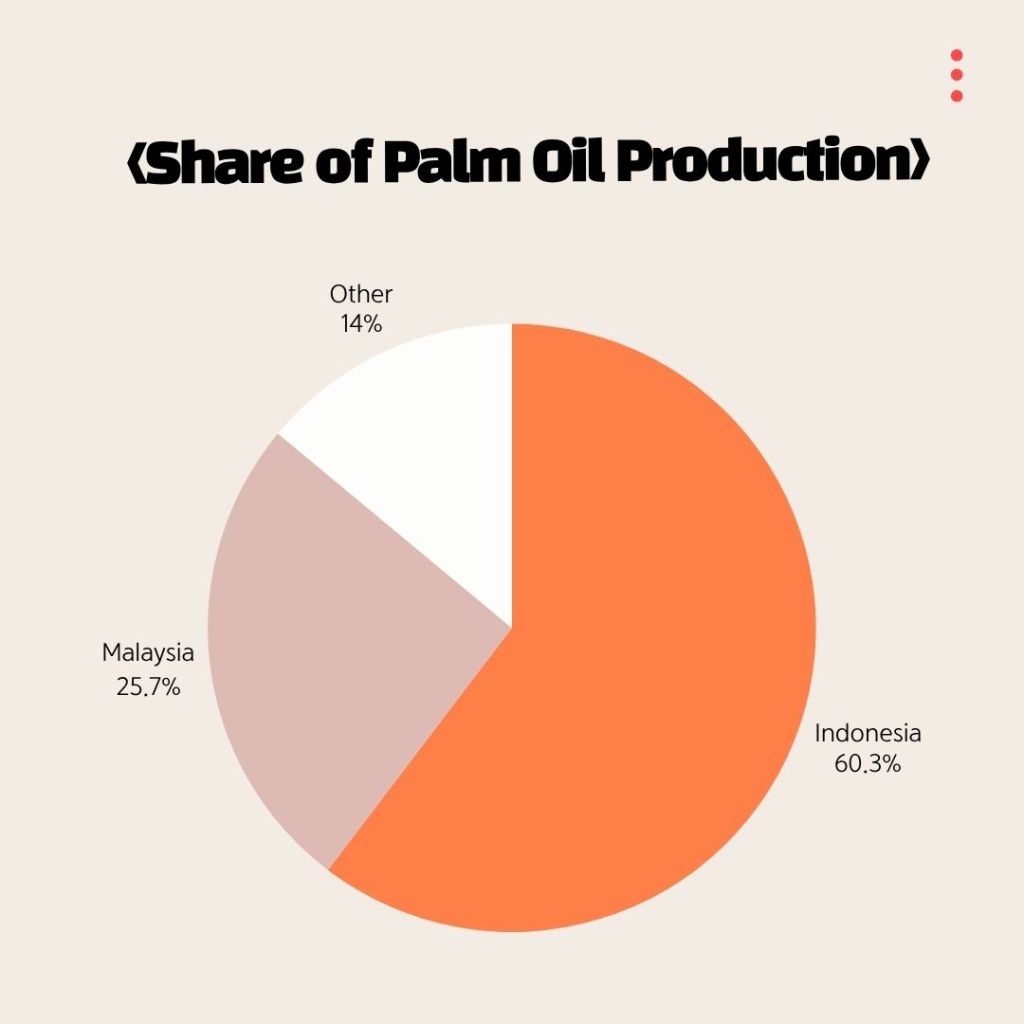
Indonesia is the largest producer of palm oil in the world and plays a significant role in global palm oil exports. In 2022, Indonesia exported approximately 6.7 billion USD worth of palm oil and other agricultural products to the EU, affecting around 8 million small-scale farmers.
Indonesia and Malaysia together account for approximately 85% of global palm oil exports, with Indonesia producing more than 45 million tons of palm oil, which accounts for more than half of global production.
Given this, the palm oil industry plays a crucial role in Indonesia’s national economy, and the EU’s deforestation regulation could have a direct impact on Indonesia’s economy.
3. Indonesia’s Response Strategy
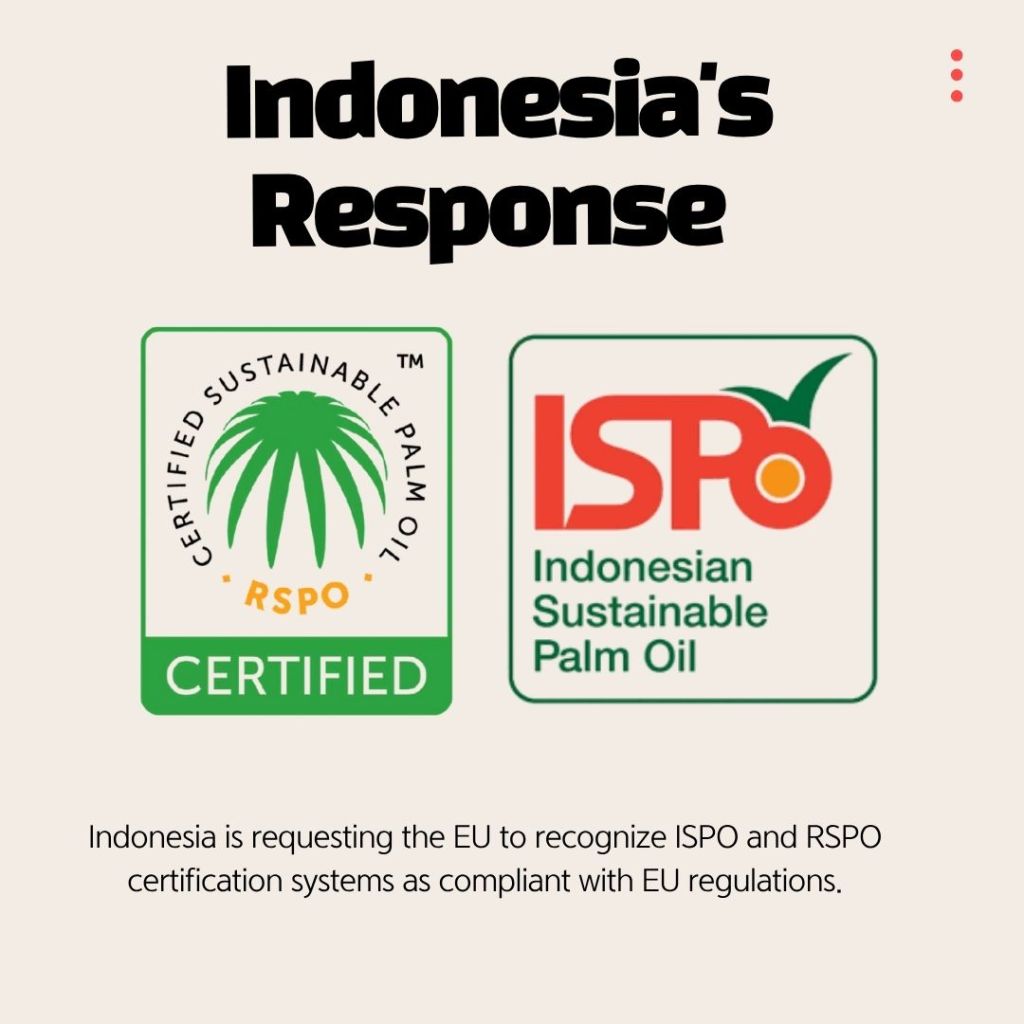
To minimize the impact of the EU regulations on its palm oil industry, the Indonesian government is exploring several response strategies. One of the key strategies is the adoption of certification schemes such as the RSPO (Roundtable on Sustainable Palm Oil). The Indonesian government hopes to have these certification schemes recognized as compliant with the EU’s environmental regulations.
Key Certification Schemes:
- RSPO (Roundtable on Sustainable Palm Oil): An international certification scheme that ensures the environmental and social sustainability of palm oil production.
- ISPO (Indonesian Sustainable Palm Oil): A certification scheme designed by the Indonesian government to ensure palm oil is produced in an environmentally responsible, socially equitable, and economically viable manner. It was established in 2009.
These certification schemes are key tools in proving sustainable palm oil production in compliance with EU environmental regulations. Additionally, the Indonesian government aims to enhance the international competitiveness of its palm oil industry and promote sustainable practices within the sector through these certification programs.
4. Current Challenges Faced by Indonesian Farmers
- Limited Opportunities for New Plantation Expansion
Due to the EU Deforestation Regulation (EUDR), palm oil produced from land cleared after December 31, 2020, is not eligible for export to the EU. This means that expanding palm oil production to new plantations will become extremely difficult in the future. - Rising Global Demand for Palm Oil
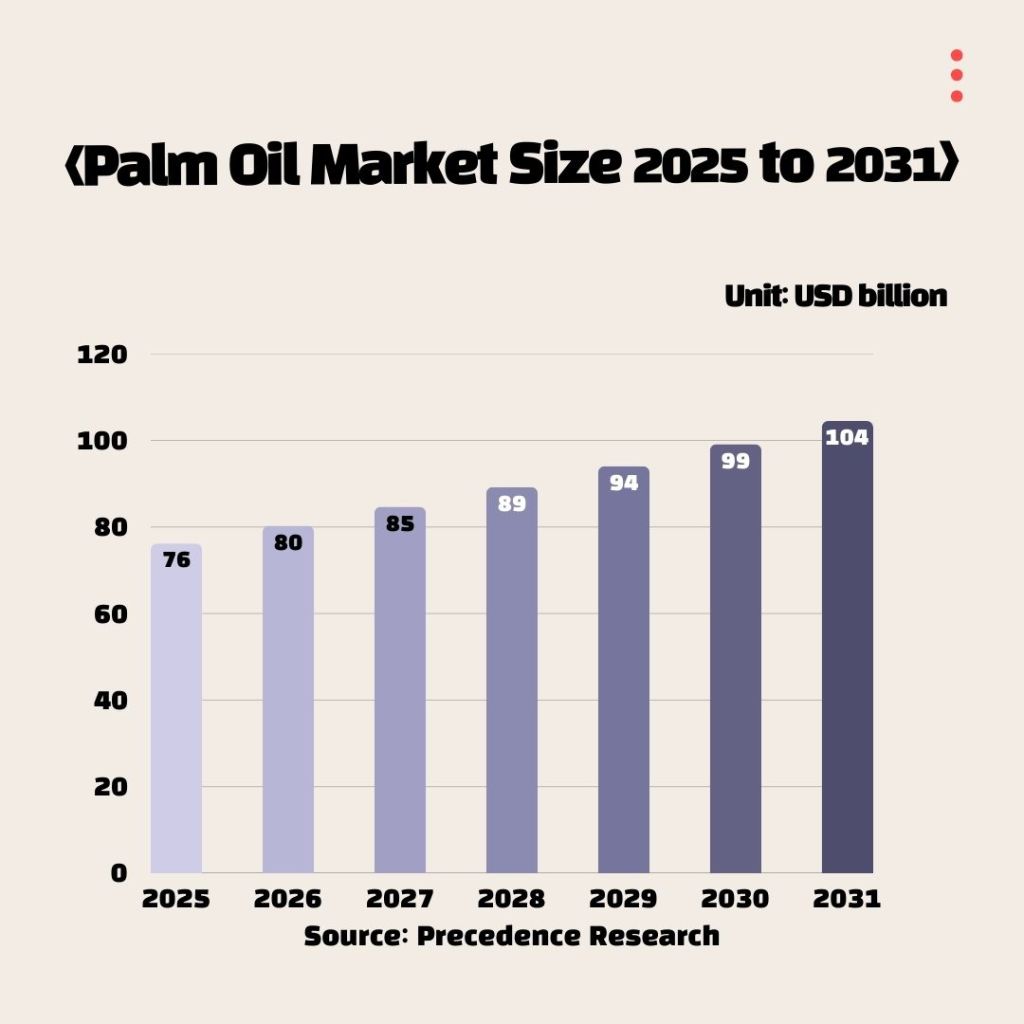
Despite regulatory constraints, global demand for palm oil is expected to continue rising, driven by its use in food products, cosmetics, and biofuels. - Policy Shift Toward Sustainable Agriculture
In response to international regulations, the Indonesian government is expected to shift its agricultural policy toward sustainable practices, including the enhancement of national certification systems like ISPO.
5. Future Direction for Indonesian Farmers
- Increase Productivity of Existing Plantations
As opening new plantations is restricted, maximizing yield from existing land is essential. Improving productivity per hectare must be a top priority. - Adoption of Environmentally Friendly Pest Control
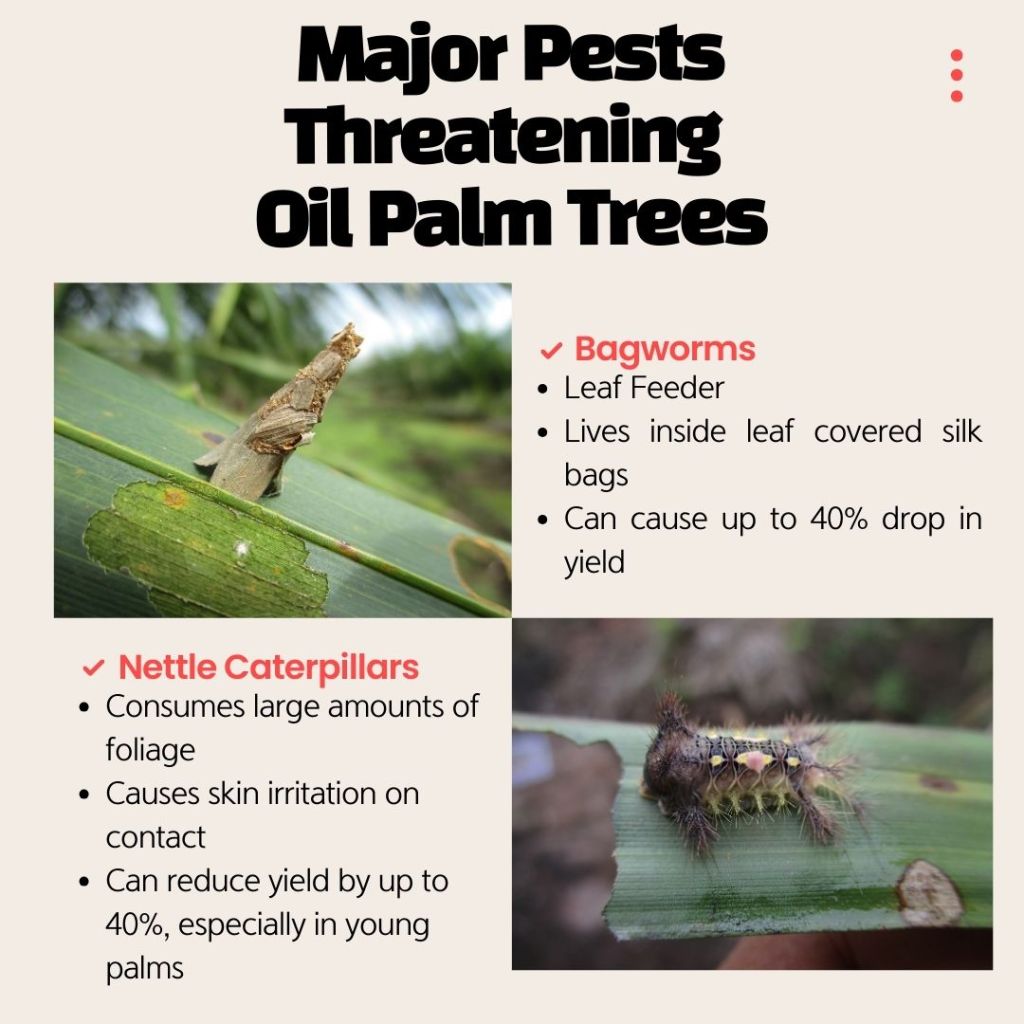
In line with EU environmental requirements, farmers must reduce reliance on chemical pesticides and adopt eco-friendly, biological pest control methods. - Major Pests and Yield Impact
- Bagworms
These pests feed on palm leaves, severely limiting photosynthesis, and can reduce yields by up to 40%. - Nettle Caterpillars
These caterpillars consume large amounts of leaves and can cause yield losses of up to 40%.
- Bagworms
- Effective control is possible through the use of Matrine, a naturally derived botanical extract used in biological pest management.
In summary, Indonesian farmers must simultaneously address two critical challenges: improving productivity and ensuring sustainability. This dual approach will enable them to stay competitive and compliant in international markets, particularly under evolving EU regulations.
 MR INNOVATION
Leave a comment